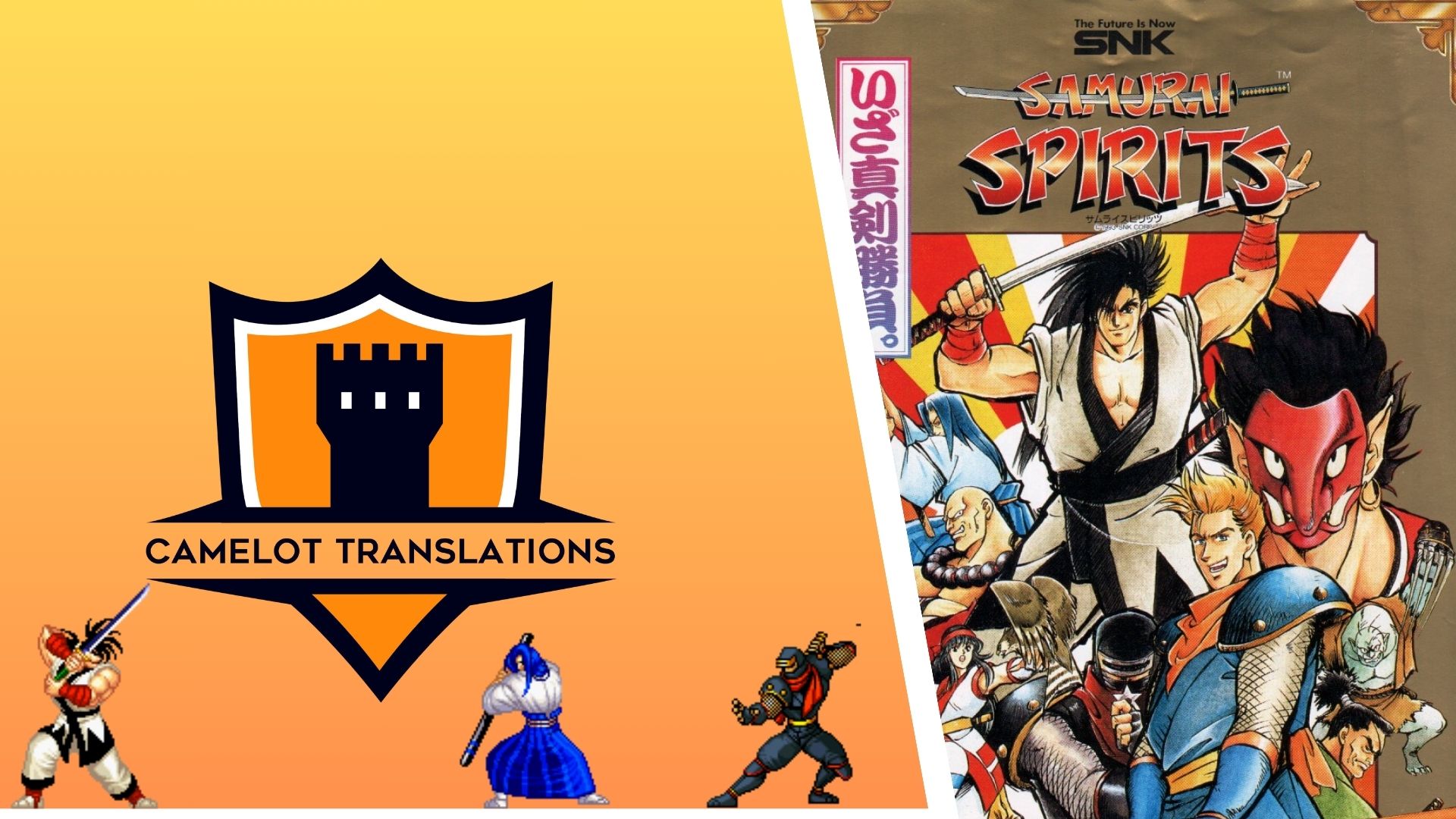
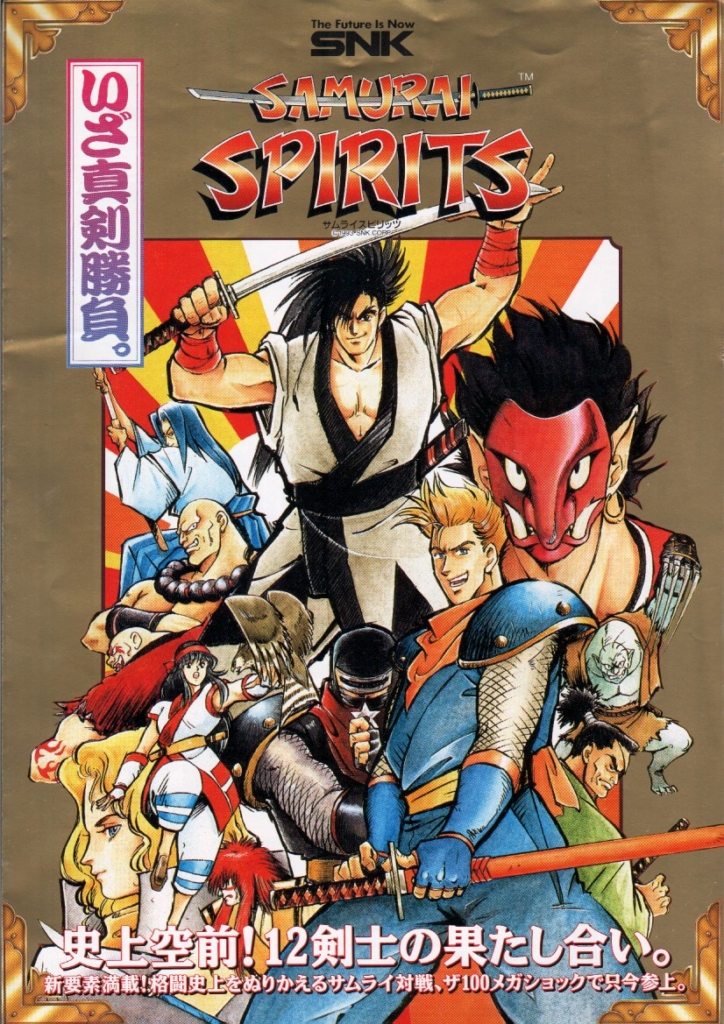
The year 1993 saw the debut of Samurai Spirits as it was known in Japan, or Samurai Shodown, as we knew it in the rest of the world, a saga that would continue to gain popularity over time and would fall, like so many others, in the so-called era of 3D games, although it would return with more force in 2019 with a complete reboot for the new generation of consoles and taking into account the features of the modern audience.
The original idea of SNK, in those days, was to bring to the arcades one more fighting game but with a variant that differentiated it from almost all those that were already on the market; for that it gave all the fighters some kind of weapon, which made the combat revolve around this element, even in the way of attacking or defending and in how this affected the fighters' energy bar.
Behind the development of the game there were several well-known names within the team of SNK who had already worked on titles such as Fatal Fury or Art of Fighting and who were joined by former employees of another giant of the fighting genre: Capcom.
Following the trend of originality, SNK decided to move away from the modern street struggle that seemed to conquer everything since the appearance of Street Fighter 2 and take its new product to feudal Japan thus proposing a story different from the standard of those days.
A bit of history
Samurai Shodown presents 12 fighters from different parts of the world that for different reasons must face Shiro Tokisada Amakusa a being that after being killed by the forces of the Tokugawa Shogunate is reborn thanks to a deal he made with the god Ambrosia.
Name change
The American distributor of SNK was not convinced that the name "Samurai Spirits" managed to convey the essence of the game in the western territories, or even establish that it was a fighting game, so they opted for an interesting word: "shodown", which could well be considered a transcreation ahead of its time.The term mixed the English word "showdown" with the Japanese "shogun" since in those days there was a TV miniseries with that name that had acquired a lot of popularity among young people in several countries.
The dreaded location
After leaving Japanese lands, Samurai Spirits became Samurai Shodown, but that was not all, reaching the European market meant bringing the game to other languages, including Spanish.
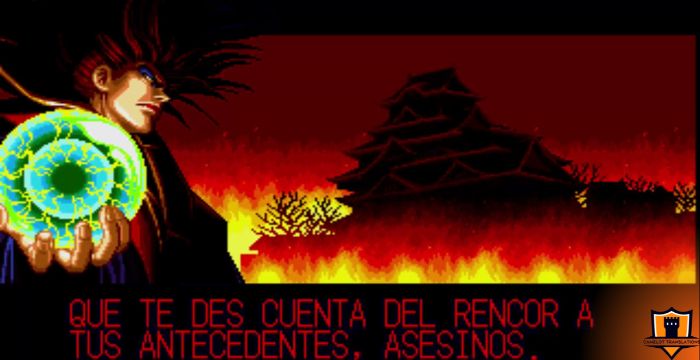
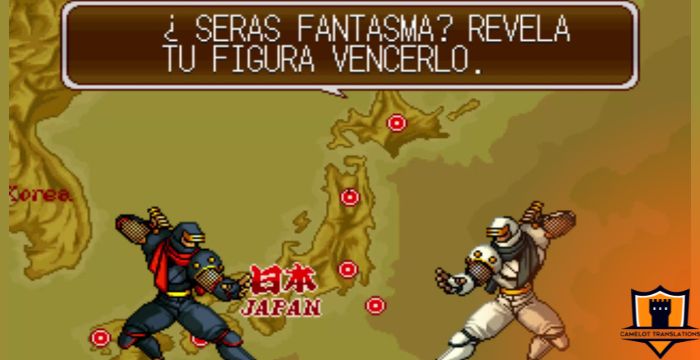
Although it was quite a milestone that at that time video games reached a language other than English and Japanese, the quality of SNK's translations was far from being even tolerable.
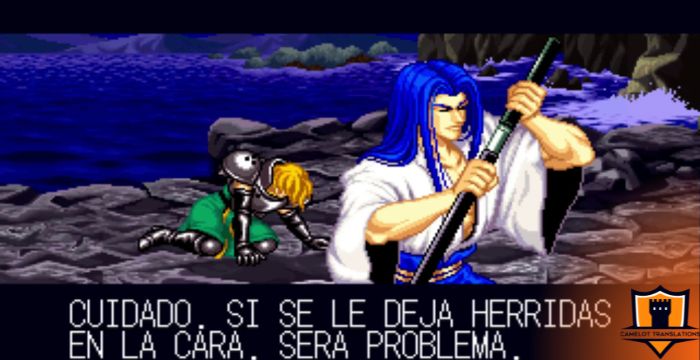
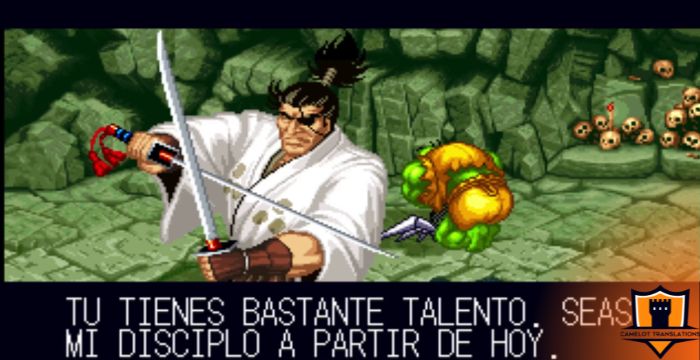
The problems are not limited to typing errors as in the case of one of Ukye Tachibana's cinematics in which the word " herida" has another "r" or the absence of the same letter in one of Jubei Tagyu's sentences in "seas" along with another missing "U" in the word "discípulo" in the same sentence but in many cases they are an absolute nonsense.
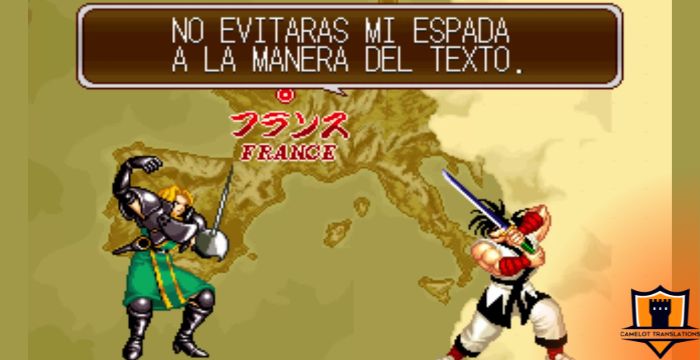
In this publication there is a wide variety of examples to select a favorite, although if I have to choose, I would say that " No evitaras mi espada a la manera del texto" has a very high place on the podium of this terrible translation.
Softened language
Samurai Shodown had versions on almost all consoles of the time, including Sega and Nintendo hardware. Beyond the limitations that occurred in the ports of the title given the technical characteristics of the home consoles of the time and the technical portent that were the SNK boards and even the Neo-Geo, the Super Nintendo edition contains some linguistic retouching compared to its counterpart of the arcades that sought to soften the final messages and adapt them to an audience that was believed too childish to read certain things.
This is how, for example, one of Nakoruru's lines of dialogue originally reads "Scourge to the ainu. Prepare to die" and in the SNES version it reads"Scourge to the ainu. Prepare your fall”On the other hand, Kyoshiro spits to his rival in the original version: "Now in this scene I rip open your belly" something that in Nintendo's home version ended up being "Now in this scene you cry like a baby".
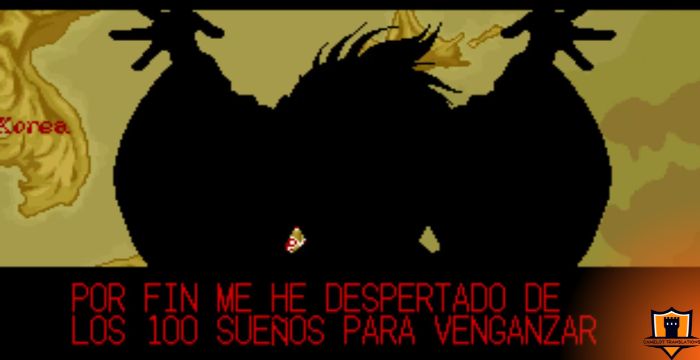
On top of the violence omitted in the text, expressions that could be classified as insults were also changed, for example, in one of Amakusa's cinematics, the original version said: "l awake from 100 years of sleep to kick butt" something that was changed to "l awake from 100years (sic) of sleep to wreak havoc".
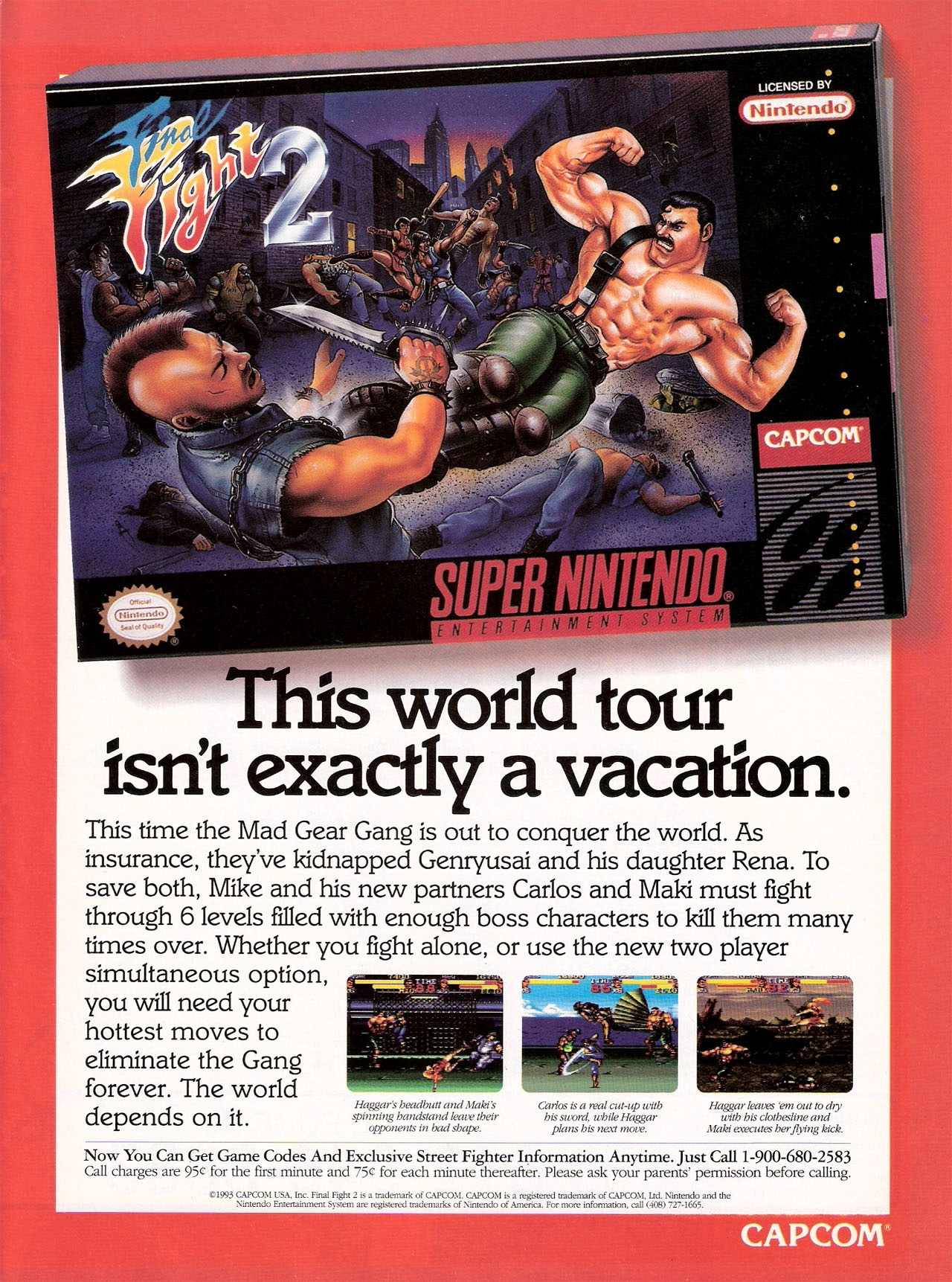
After a rather poor home adaptation of the arcades of the original Final Fight, in 1993 the sequel to Capcom's beat’em up arrived exclusively to the Super Nintendo. It kept only one of the main characters of the original edition, Mike Haggar, and this time the game allowed two players to play at the same time. The mayor of Metro City would be in this installment accompanied by Carlos and Maki in an adventure that would lead them to break bones literally all over the world with the goal of rescuing Geryusal, Guy's (one of the protagonists of the first installment) teacher and his daughter from the clutches of the always fearsome Mad Gear gang.
As occurred previously in the adaptations of the original Final Fight, the Eastern and Western versions had different variants, some more logical than others. In those days, although an internal Capcom team was in charge of the localization and regionalization of the titles, many of the modifications were requested directly by Nintendo's American subsidiary, whose guidelines were quite strict and aimed to avoid any conflict, mainly, with groups of parents who frowned upon certain content with which their children played.
Below we will see some of the most striking differences between the editions of both hemispheres. The reasons for these modifications may be due, as mentioned above, to Nintendo's own request or a preventive decision by the developers, in any case, the result is, at least, curious.
Weapons
From the very beginning we can notice Capcom's magic touch in relation to the character of Won Won, the first boss of the game that makes his appearance on the coasts of Hong Kong, a city quite visited by the world of video games and cinema back in the early 90s.
In the Eastern version of the title, the Chinese antagonist has, in his left hand (top photo), a sharp butcher's knife that he does not hesitate to use to attack the player, however, in the version released in the rest of the world, the knife is nowhere to be found.
Gender changes
A fairly common practice at the time, especially by Capcom, was to replace the sprites sprites of female enemies and transform them into male antagonists depending on the region where the game was released. Final Fight 2 was no exception, as you can see in the images on the right, in Asia the title had female enemies while in the West it did not (lower image). Although the male enemies had the same movements as the female ones, the aesthetic difference was clearly visible.
It should be noted that in the adaptation of the Super Nintendo port of the first Final, this difference (among many others), was also present, with the particularity that in Western territories, Poison was replaced with another generic enemy, which resulted in a lot of criticism from fans even back then. Perhaps by his own personality or by this decision, Poison became one of the favorite Capcom characters, which would make him appear in several other games, even as a playable character within the Final Fight franchise where the gang member is a member of Final Fight Revenge roster.
The mystery of the sign
Although some of the changes could be defined as controversial or simply unnecessary, perhaps the most absurd is the one in the France stage where the sign that announces the direction in which, I believe, tries to be the famous French airport "Charles de Gaulle" is located.
In the Japanese version of the game, the Parisian airport was renamed "Chailee de Gaulle" in what could well be a spelling error of some kind, however in the Western edition the sign no longer shows the name of the airport anywhere.
The change, or omission, may be due to the fact that it was simply much easier to erase the airport name in terms of programming and design than correcting the characters so that the name looks good.
https://camelottranslations.com/wp-content/uploads/2024/04/FF-II-scaled.jpg14402560Gabriel Fuenteshttps://camelottranslations.com/wp-content/uploads/2024/04/camelot-translations-logo-2-300x283.pngGabriel Fuentes2024-04-14 12:25:552025-01-12 17:26:34The localization of Final Fight 2
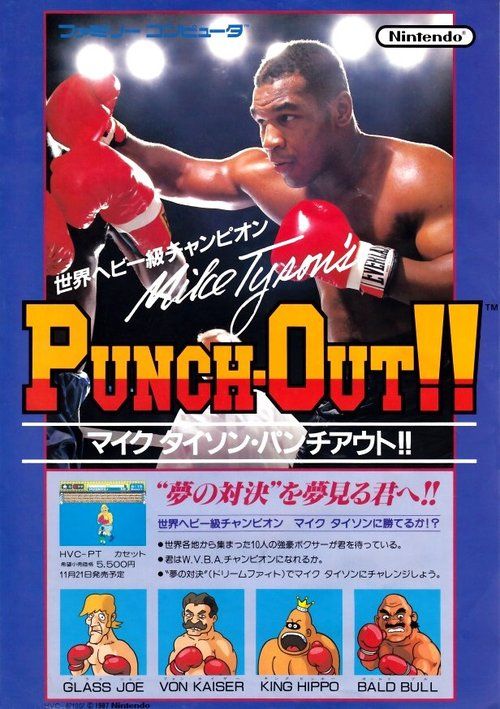
It's 1987 and Nintendo decides to adapt to its NES a version of its two 1984 arcades, Punch Out!! And Super Punch Out!! With a brilliant novelty: the incorporation of Mike Tyson as the final boss of the game.
Punch Out!! Originally debuted in Japan with a golden cartridge that was part of the prize given to players for participating in the Family Computer Golf U.S Course and that had Super Macho Man as final boss, same as in the arcades. Only 10,000 copies were made of this cartridge.
The title was later baptized as Mike Tyson’s Punch Out although later it would only be known as "Punch out!!" when the contract with the heavyweight champion ended and -many say- after his defeat with Buster Douglas. Fun fact: it is interesting to note that Nintendo signed the agreement with the boxer even before Tyson became a champion, and the contract would have been closed for a sum of $50,000 for a period of 3 years.
When Tyson's contract expired, the last opponent of the game in new versions became Mr. Dream and the title was Punch Out!! again.
Outside the Japanese borders, the title underwent some modifications that are worth noting.
Language
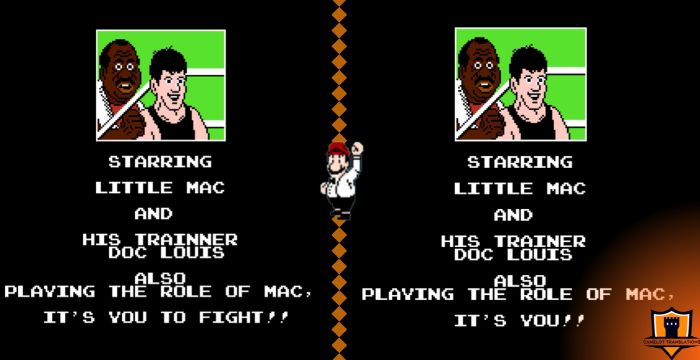
The first versions of Mike Tyson's Punch Out several spelling errors in English, for example, the word "trainer" has another extra "n". Additionally, the phrase "It's you to fight!!" was also corrected being somewhat strange.
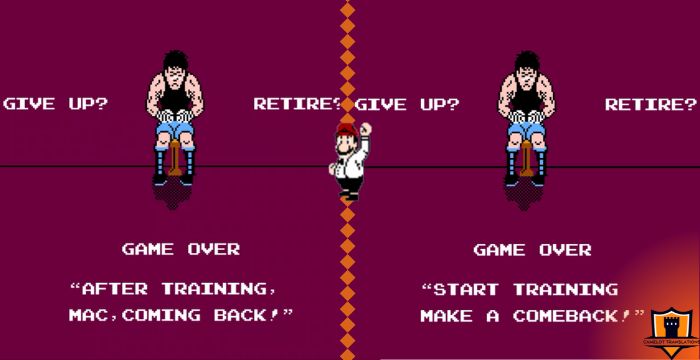
Another rather peculiar instance that was modified in the last version of the game is the phrase that appeared on the Game Over screen that originally read "After Training, Mac, Coming Back" and that was altered without further changes in the number of characters by "Start training make a comeback!"
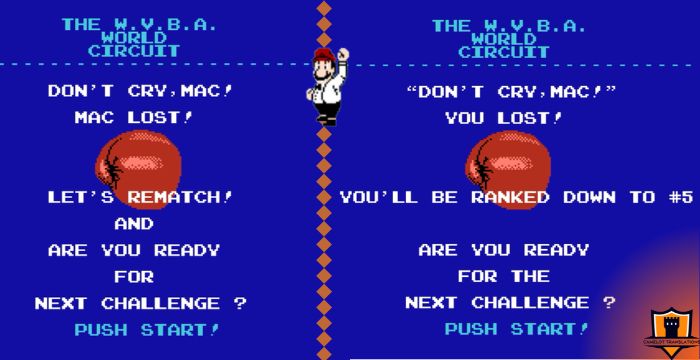
The continue screen also had its tweaks, the first version spoke to the protagonist although then it referred to him again in the third person and omitted the "the" in the final question. The latest version of the game corrected these two items and also added the information of the player's descent in the ranking.
Colors
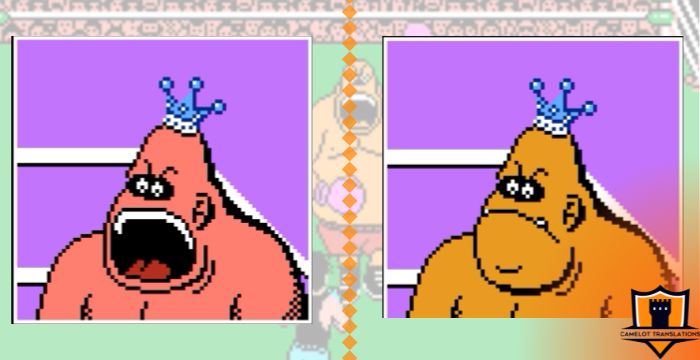
Other changes between the versions are the different color palettes between regions. Some are seen on the canvases of the different rings, in the player's own interface or even in the skin tone of King Hippo, which looks whiter in the West than in the East.
Offensive references
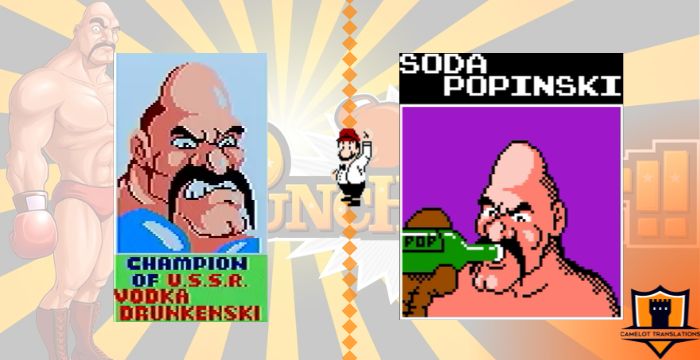
Nintendo's obsession with not getting into any kind of conflic is well known, and in Punch Out!! this possibility, no matter how tiny it may seem, was represented in the Russian boxer Soda Popinski. In clear allusion to the Russian stereotype of compulsive vodka drinkers, the character was called in the arcade version “Vodka Drunkenski”, but when he arrived on the NES, the fighter was renamed Soda Popinski, despite the fact that the dialogues between rounds made a clear reference to his passion for strong drinks.